Coral reefs are among the richest most varied communities of life found anywhere in the ocean. A submerged reef is a rock formation that has been covered by sand.

How Waves Break
Alternatively the wave encounters shallow water more abruptly a rock reef or a steep beach with well defined sand bars in this situation the wave rapidly changes shape and the lip plunges forward in the most extreme case producing a hollow barrelling wave.
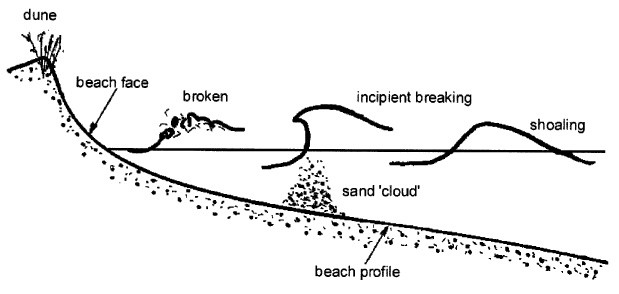
The waves break the reef continually cause. A gently sloping approach causes the bottom of the wave to drag and will result in the top of the wave prematurely overtaking the bottom resulting in the wave breaking in deeper water. Where does a waves energy come from. According to Andrew reef depth and location are the primary contributors to the consistency problem.
The results published in a report in the journal. According to locals the reef does not break when the waves are under chest high which would mean that the reef failed to meet the design requirement of working from 5 meters. Waves are most commonly caused by wind.
This happens when it approaches the shore rocks or reef. If youve read everything we have written up to this point you know that its the action of the sea bed slowing the bottom part of the wave that causes the wave to break. Wind-driven waves or surface waves are created by the friction between wind and surface water.
The approach of the bottom in shallow areas causes the lower portion of the wave to slow down and compress forcing the waves crest higher in the air. While climate change threatens coral reefs in oceans around the world not all reefs are affected equally. Most of the worlds gnarliest waves break over reefs but there is no reason to think that there are no forgiving reef breaks either.
A reef break is created by a wave breaking over a rock or coral formation under water. Eventually the wave crests or breaks-- the fast-moving back of the wave spills over the slowing front of the wave. Ocean trenches and submarine canyons can also determine how a wave breaks.
If a reef break depends on the tides then the increase of water to the reef alters the tides. When a wave rolling along encounters a reef the lower part of the waves energy drags against the reef and slows down. When the water depth decreases to one half of a waves wavelength the wave starts to feel the bottom.
The average wave across the Earth will get smaller due to there being more water from melting ice caps. As oceans warm physical forces like wave strength and water flow influence which reefs thrive and which die according to a study led by Justin Rogers a postdoctoral researcher at Stanfords Environmental Fluid Mechanics Laboratory. However even the friendlier reef breaks are risky because of the treacherous seabed and should be avoided by complete beginners.
When the wave steepness the ratio between wave height and wavelength exceeds a ratio of 17 it becomes unstable and breaks. As wind blows across the surface of the ocean or a lake the continual disturbance creates a wave crest. Eventually this imbalance in the wave reaches a breaking point and the crest comes crashing down as wave energy is dissipated into the surf.
Such sand covers many tropical beaches and helps form new land. The top part of the waves energy continues moving at the same speed and that is why it starts tipping. Another application in plasma physics is plasma expansion into a vacuum in which the process of wave breaking and the subsequent development of a fast ion peak is described by the Sack-Schamel equation.
The slope of the sea floor greatly influences how quickly the sea floor affects the waves as the waves get closer to shore and therefore how the waves break. A wave breaking off a solid rock or coral reef looks very similar today as it did 20 50 or even hundreds of years ago. The exact shape of the ocean floor has a dramatic difference on how the waves break.
When waves break down the hard coral of a reef they pound it into a fine sand. Waves break due to the distance between the surface water and the sea floor. If the shore slopes gently upward the wave will gently spill over as it crests.
Reef breaks can either have submerged reef or exposed reef. Combustion of fossil fuels as well as surface heating have increased the global temperature by 2 degrees Fahrenheit. A reef or spot of shallow water such as a shoal against which waves break may also be known as a.
Reefs are broken and eroded by fast-moving powerful waves that crash into them. This is why you will see experienced surfers riding the waves before they begin to crest or break and beginner surfers riding the whitewash closer towards the shore. Seaweed can slow a breaking wave.
A steep slope can cause waves that break suddenly and dramatically. These waves break slowly theyre definitely surfable and can form the staple part of many surfers diets but are often slower to ride. Reefs sandbars and large underwater boulders are examples of common surf breaks.
Surfers must account for the presence of sea life such as a kelp forest a dense cluster of large seaweed. Wave breaking also occurs in plasmas when the particle velocities exceed the waves phase speed. Additionally breaking waves can be interpreted to mean the wave is broken.
Surf breaks are permanent features that cause waves to break in a predictable way. Depending on what causes the wave to collapse will often determine the quality of the wave. Submerged reefs are typically safer to surf over than any other type of reef.
As it grows a coral reef provides homes for a vast number of living creatures. Once a wave has broken it will continue to lose speed and power as it travels toward the shore. Surfable waves form when the water gets so shallow that the wave gets to heavy and collapses on itself.
This forces the wave to grow upwards so wave height increases. That means that the deepest water molecules set into circular motion by the waves energy run into the seafloor.

Pdf The Design Limitations Of A Circular Wave Pool
Uh Passive Voice Explanation Text English Quiz Quizizz

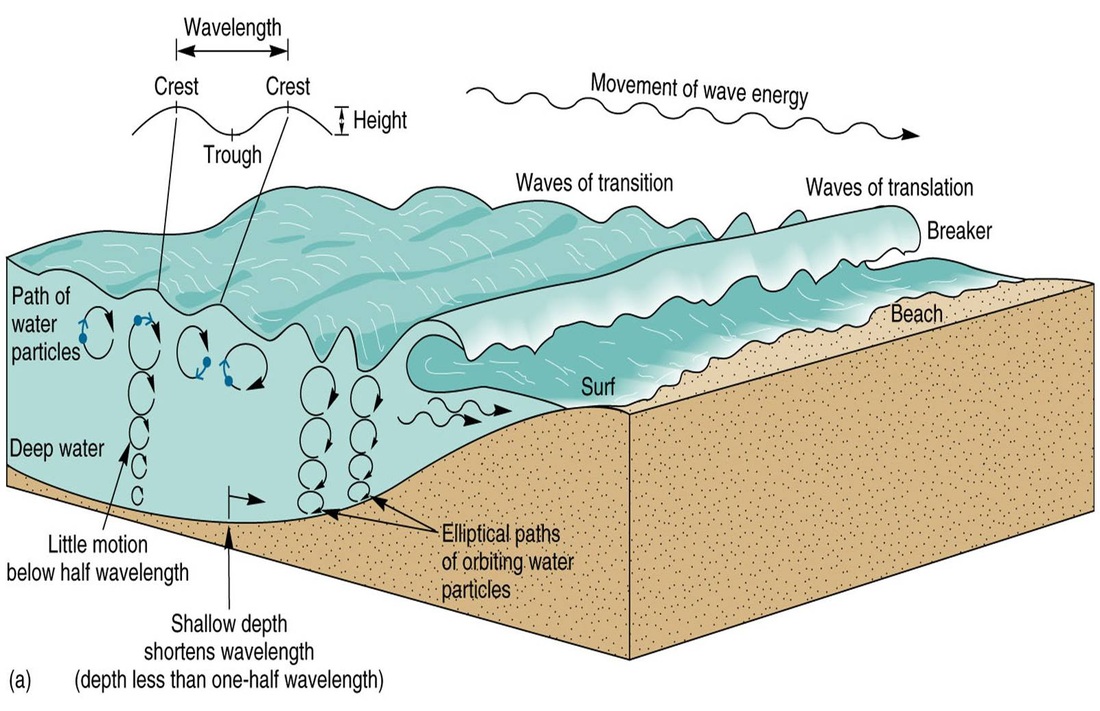
Coasts The Geographer Online

How Coral Reefs Can Help Us Endure Climate Change Wave Energy Coral Reef Climate Change
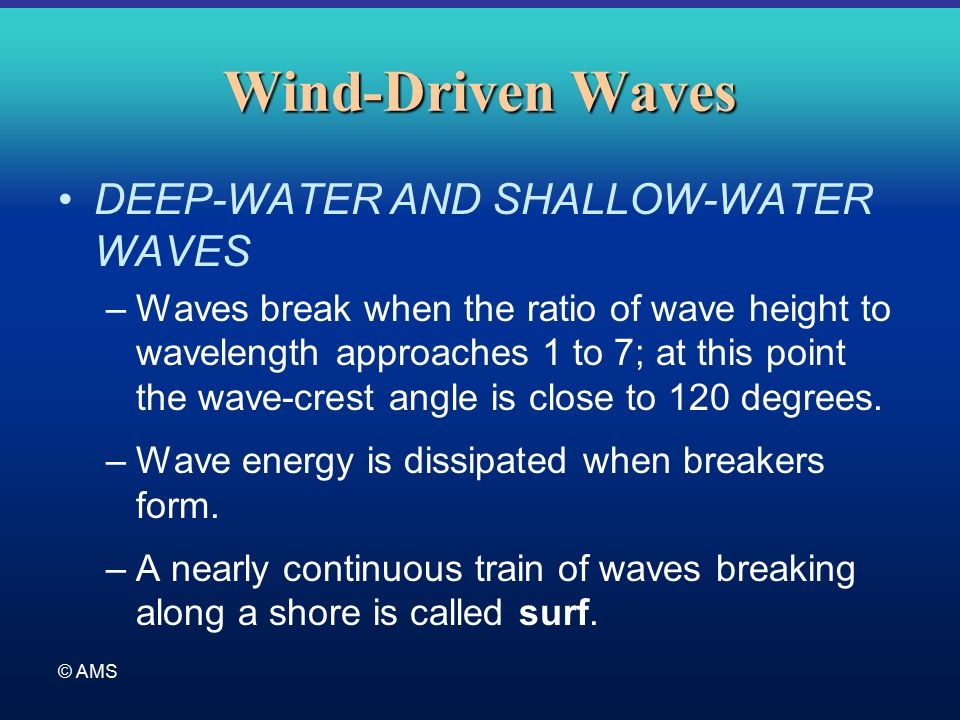
Chapter 7 Ocean Waves And Tides Ppt Video Online Download
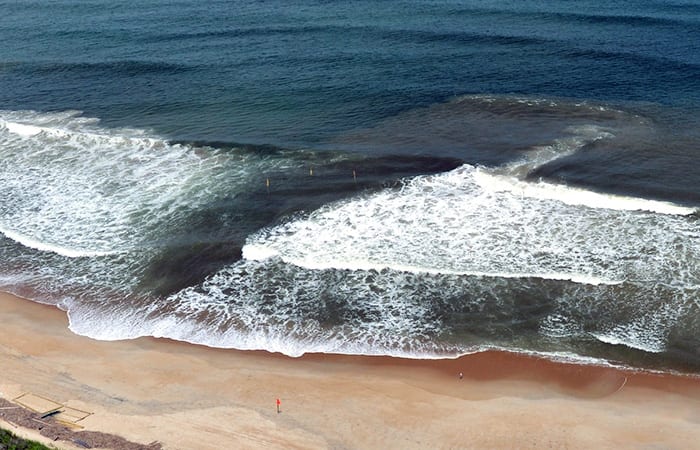
The Riddle Of Rip Currents Woods Hole Oceanographic Institution
Preparation For Final Exam About Explanation Text Coral Reef Earthquakes

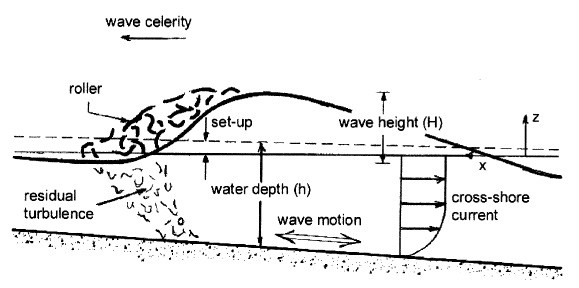
Surf Zone Processes Springerlink
Preparation For Final Exam About Explanation Text Coral Reef Earthquakes


B Reading Section The Following Text Is For Questions 6 To 9 An Atoll Starts With An Undersea Brainly Co Id

The Four Types Of Breaking Waves
Preparation For Final Exam About Explanation Text Coral Reef Earthquakes

How To Read The Sea Read The Water Part 1

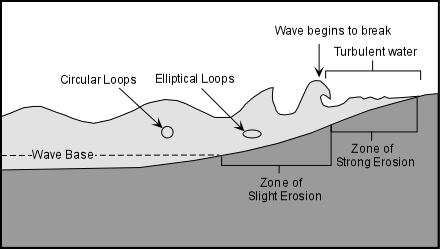
Coastal Zones

How Waves Break
Pagina S Termos
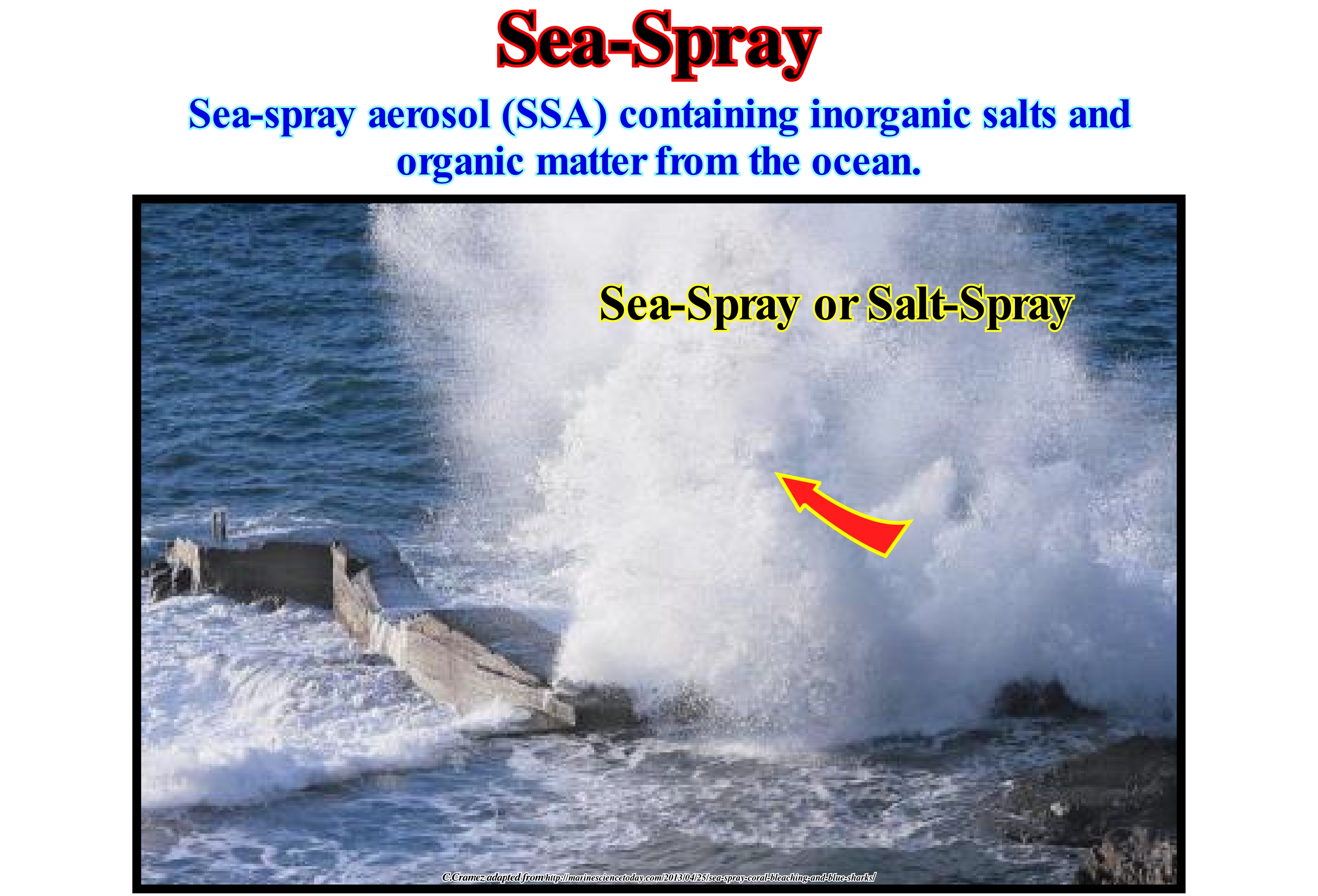

The Science Of Surfing Page 2 Yourtwice Weekly Dose Of Surf Science Wisdom

How Waves Break
Surf Zone Processes Springerlink

